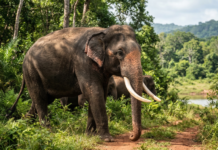
Sri Lanka is one of the few places on Earth where the world’s largest land mammal (the elephant) and the world’s largest marine mammal (the blue whale) can be seen in a single day. The deep waters surrounding this island nation are not just a transit point; they are a thriving, year-round habitat for giants.
The Continental Shelf: Nature’s Deep-Sea Amphitheater
The secret to Sri Lanka’s whale-watching success lies beneath the waves. Unlike many other coastlines where the ocean floor slopes gradually, the continental shelf off the southern coast of Sri Lanka—specifically near Mirissa—drops off precipitously into the abyss very close to the shore.
- The Upwelling: This steep drop creates a natural phenomenon called upwelling, where nutrient-rich cold water from the deep rises to the surface.
- The Food Chain: These nutrients trigger massive blooms of plankton and krill, the primary food source for baleen whales. Because the deep water is so close to the land, travelers only need to boat a few miles out to find themselves in the middle of a prime feeding ground.
The Blue Whale: A Resident Giant
The star of the show is undoubtedly the Blue Whale (Balaenoptera musculus). While most blue whale populations are known for vast migrations between polar feeding grounds and tropical breeding lagoons, Sri Lanka’s blue whales are different.
- Year-Round Residency: Research suggests that a significant population of blue whales stays in the northern Indian Ocean year-round. They have found everything they need—food and warmth—in these waters.
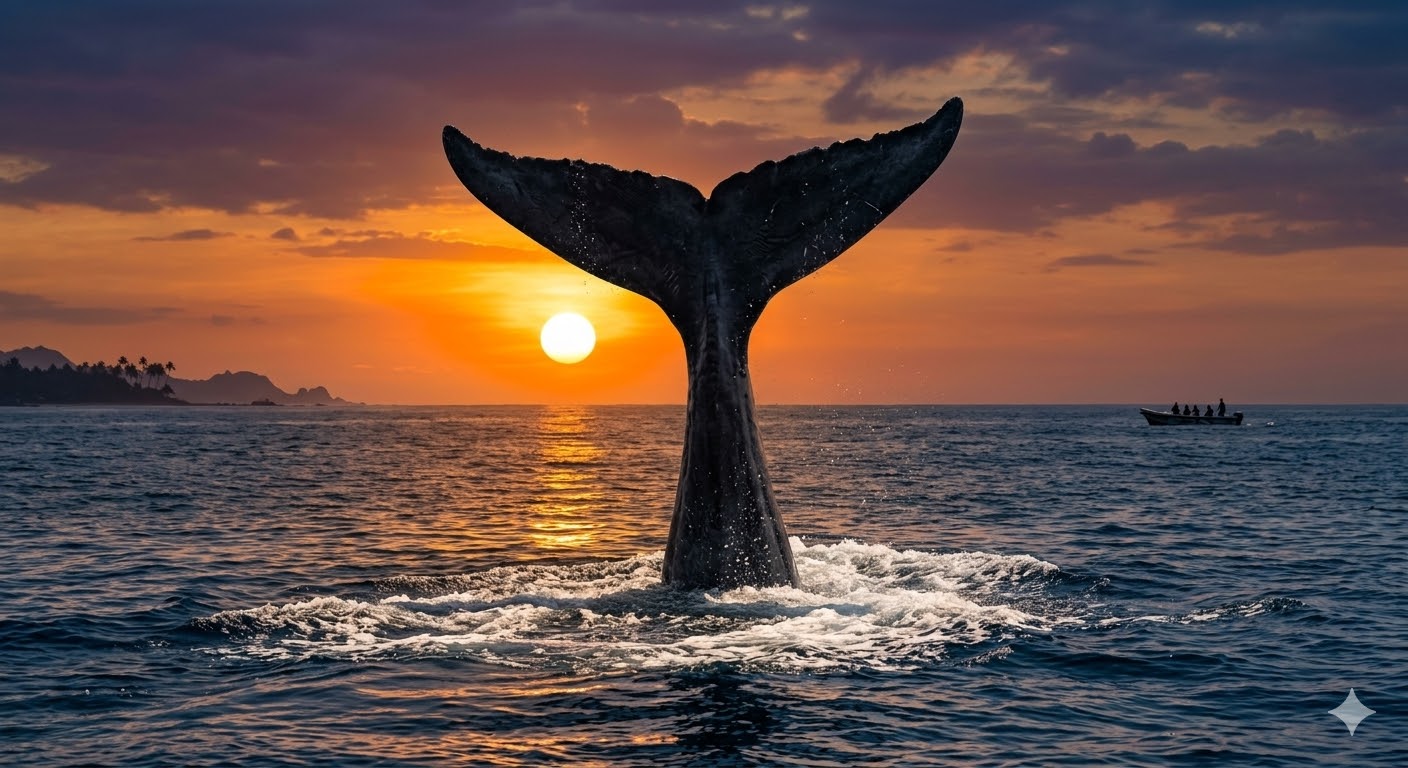
- The Scale of Majesty: Seeing a blue whale’s “blow” (a 10-meter tall spray of water) on the horizon is the first thrill. But nothing prepares you for the sheer length of the animal as it surfaces—often taking several seconds for its entire back to glide past—before it arches and shows its massive tail (the fluke) for a deep dive.
The Deep Divers: Sperm Whale Super-Herds
While Blue Whales are the largest, Sperm Whales (Physeter macrocephalus) are the most enigmatic. These are the deep-sea champions, diving miles down into the darkness to hunt giant squid.
- The Kalpitiya & Trincomalee Connection: While Mirissa is famous for Blues, the waters off Kalpitiya (on the west) and Trincomalee (on the east) are hotspots for Sperm Whales.
- Social Super-Herds: Unlike solitary Blue Whales, Sperm Whales are highly social. Occasionally, lucky observers witness “super-herds”—gatherings of 50 to 100 whales socializing on the surface. They are easily identified by their “sideways” blowhole and their wrinkled, prune-like skin.
Conservation and the Silent Threat: Ship Strikes
The very thing that makes Sri Lanka great for whales—its location—also makes it dangerous. The southern coast sits right next to one of the world’s busiest international shipping lanes.
- The Danger Zone: Massive cargo ships and tankers pass through the same waters where whales feed and rest. Because blue whales are often slow to react to oncoming vessels, ship strikes are a leading cause of mortality for this population.
- Sustainable Solutions: Conservationists are currently working with the Sri Lankan government and international maritime organizations to move the shipping lanes further south, away from the core feeding areas. Choosing a responsible tour operator who follows “no-wake” zones and keeps a respectful distance is a small but vital way for tourists to help protect these giants.
Beyond the Whales: The Supporting Cast
A whale safari in the Indian Ocean is rarely a single-species event. The nutrient-rich waters support a dizzying array of marine life.
- Dolphins: You are almost guaranteed to encounter Spinner Dolphins, often in pods of hundreds, leaping and spinning in the air. You might also spot Bottlenose or Risso’s dolphins.
- Rare Sightings: If you are incredibly lucky, you might spot Orcas (Killer Whales), Pilot Whales, or even the prehistoric-looking Whale Shark basking near the surface.