Deep in the southwest of Sri Lanka lies a prehistoric world where the air is thick with humidity and the canopy is so dense that even the midday sun struggles to reach the forest floor. This is Sinharaja, the island’s last viable primary tropical rainforest.
A UNESCO World Heritage Site and a Biosphere Reserve, Sinharaja is a living relic of the Gondwanaland era. To walk its trails is to witness a level of biodiversity so concentrated that almost every plant, bird, or insect you see exists nowhere else on the planet.
The Last Bastion: Why Sinharaja is a Global Treasure
Sinharaja (meaning “Lion King”) is a “primary” forest, meaning it has remained largely undisturbed by human activity for millennia. While much of Sri Lanka’s original forest cover was cleared for tea and rubber during the colonial era, Sinharaja’s rugged terrain and steep slopes acted as a natural shield.
- A Genetic Goldmine: Because it has been isolated for so long, Sinharaja serves as a refuge for ancient species. It is a critical watershed for the island, feeding the rivers that sustain millions of people and thousands of acres of farmland.
- The Vertical Ecosystem: The forest is structured in distinct layers, from the massive emergent trees that tower 45 meters high to the shaded forest floor teeming with fungi and ferns.
Endemic Wonders: Wildlife Found Nowhere Else
The true magic of Sinharaja lies in its endemism. Over 60% of the trees are endemic to Sri Lanka, and for birds, that number is even more staggering—nearly all of the island’s 26 endemic bird species can be found here.
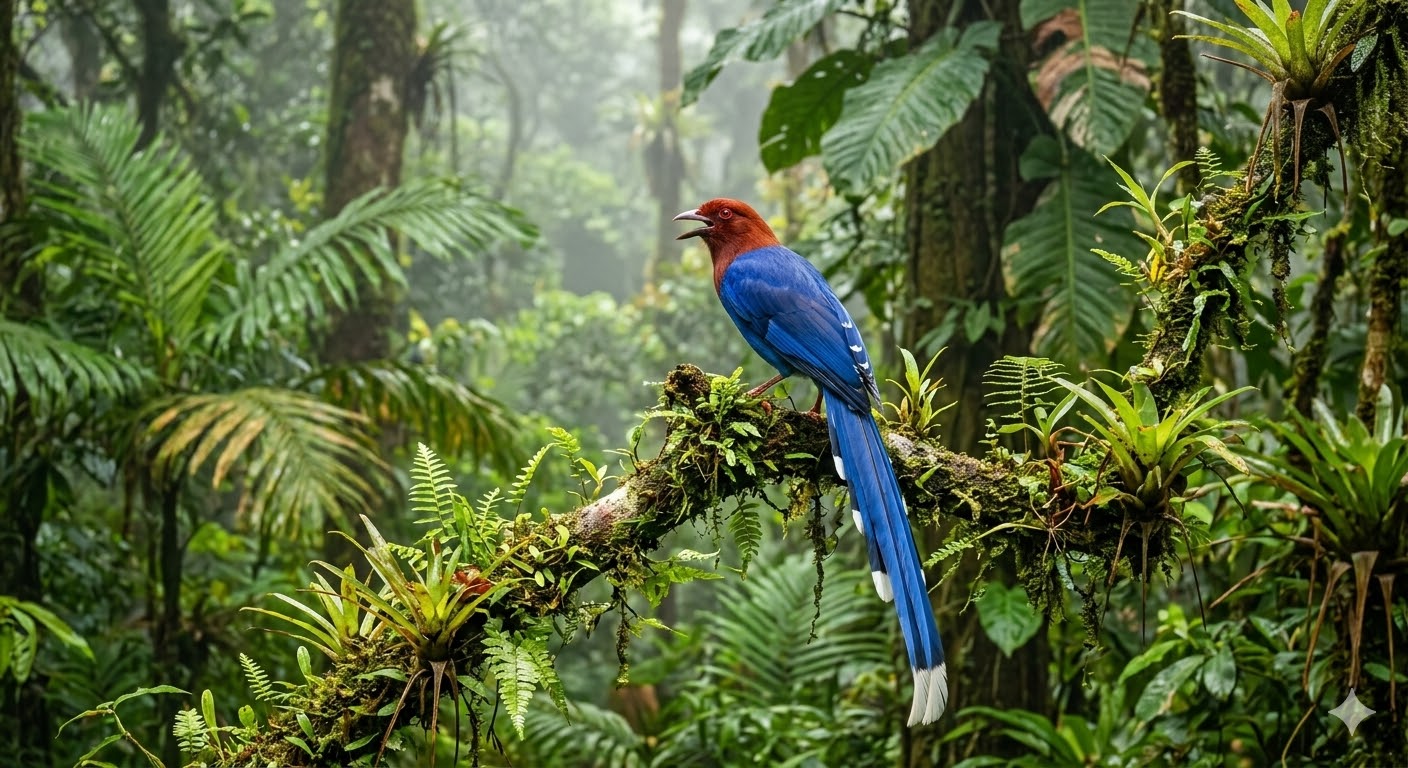
- The Mixed-Species Feeding Flock: One of the most famous phenomena in Sinharaja is the “Bird Wave.” Birds of different species travel together in a massive, noisy flock to hunt for insects. You might see the vibrant Sri Lanka Blue Magpie leading the way, while the Red-faced Malkoha skulks in the mid-canopy.
- Hidden Gems: Look closer at the mossy trunks and you might spot the Hump-nosed Lizard or the iridescent Sri Lanka Tree Nymph butterfly. The forest is also home to the Purple-faced Langur, a shy, leaf-eating monkey that crashes through the high canopy.
The Jungle Trek: A Raw Immersion
There are no jeeps in Sinharaja. To experience this forest, you must enter on foot. Trekking here is a sensory overload: the smell of damp earth, the constant hum of cicadas, and the sudden, cool spray of hidden waterfalls.
- The Leech Factor: No blog about Sinharaja is complete without mentioning leeches. These tiny “vampires” are a sign of a healthy, moist ecosystem. While harmless, “leech socks” are a mandatory part of the Sinharaja uniform to keep your ankles bite-free.
- The Trails: Popular routes like the Moulawella or Sinhagala peaks offer breathtaking panoramic views over the misty canopy, looking like a green, undulating ocean.
Conservation and the Buffer Zone: A Delicate Harmony
The survival of Sinharaja depends on the “Buffer Zone”—the area surrounding the core forest where local villages are located. For decades, these communities lived off the forest, but today, they are its primary guardians.
- Eco-Tourism as a Shield: Many former loggers or poachers now work as expert guides, using their intimate knowledge of the jungle to help tourists find camouflaged reptiles and rare orchids.
- The Threat of Fragmentation: Despite its protected status, Sinharaja faces threats from illegal gem mining and encroachment. Conservationists are working to create “wildlife corridors” to link Sinharaja with other nearby forest patches, ensuring that animals have enough space to roam and maintain genetic diversity.
A Pilgrimage for Nature Lovers
Sinharaja is not a place for a quick “check-box” visit. It is a place for slow observation, for listening to the rain hit the broad leaves, and for appreciating the intricate web of life that has existed here since before humans walked the earth. It is, quite literally, the lungs of Sri Lanka.