The tropical heat of Sri Lanka is a defining feature of life on the island. While the turquoise waters of the coast and the cool misty mountains offer relief, the true antidote to the sweltering sun is found at the ubiquitous, unassuming roadside stalls (Thé Kadés). These little shacks, constructed from wood, tin, and palm fronds, are oases of flavor, dispensing liquid gold that has sustained locals for centuries.
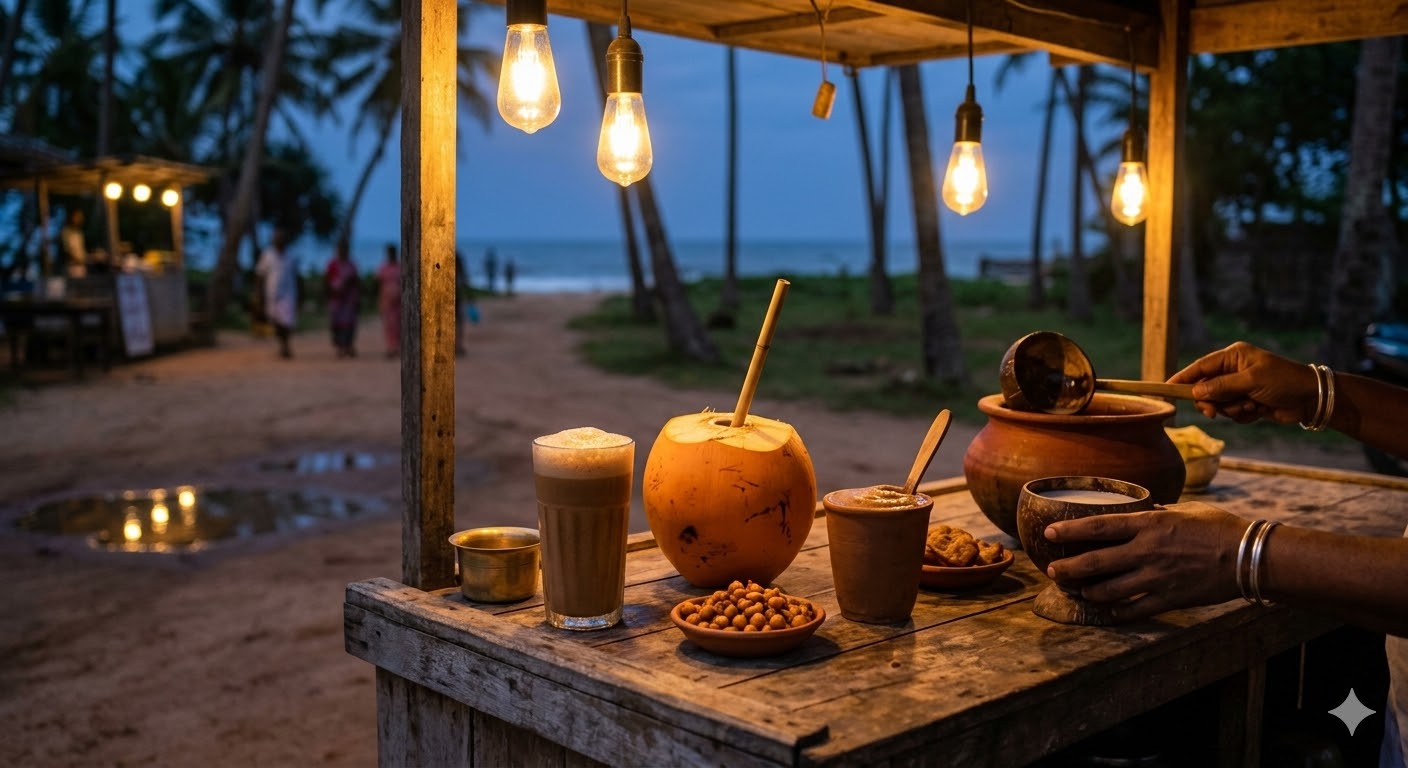
Forget commercial sodas; a journey through Sri Lanka is incomplete without sampling its atmospheric collection of traditional drinks. In this post, we sit at a weathered Thé Kadé as evening falls, exploring four iconic beverages: Thambili (King Coconut), Kiri Thé (Milk Tea), Wood Apple Shake, and the spirited Toddy.
Liquid Gold from the Tree of Life: Thambili (King Coconut)
You cannot travel far in Sri Lanka without seeing clusters of bright orange nuts stacked neatly by the roadside. This is Thambili, the King Coconut—nature’s ultimate hydration solution and the undisputed king of island refreshments. Unlike green coconuts, which are prized primarily for their milk and meat, the Thambili is cultivated specifically for its water.
- The Ritual: Stop your vehicle, and the vendor will expertly wield a machete (catty). With a few swift, precise strokes, they shear the top off the nut, creating a natural bowl, and hand it to you with a simple straw (often bamboo or paper today).
- The Taste: The water inside is exceptionally pure, cool (even on a hot day), and possesses a delicate, refreshing sweetness that far surpasses commercial coconut water. It is packed with natural electrolytes, making it the perfect restorative after exploring ancient ruins or surfing.
- The Atmosphere: Drinking Thambili is an immersive experience. You stand on the side of the road, the machete ringing in the background, surrounded by the bright orange spheres, with the rustling palm fronds overhead. It is the simple, honest flavor of the island.
The Heartbeat of Ceylon: Kiri Thé (Milk Tea)
While Ceylon Tea is a world-renowned commodity, the way locals enjoy it at a Thé Kadé is an art form. Kiri Thé (Kiri means milk) is the backbone of social life in Sri Lanka, enjoyed multiple times a day—during morning breaks, after lunch, and especially during the early evening gossip sessions.
- The Blend: This is not a delicate, brewed cup of Earl Grey. Kiri Thé requires a robust, strong black tea (BOPF grade, the dust-like texture that packs the most flavor), which is brewed intensely. This strong ‘kahata’ is then mixed generously with either sweetened condensed milk or powerful milk powder and sugar.
- The “Pulling” Spectacle: The magic happens next. The Thé Kade Bass (the master tea maker) takes two large, usually brass, cups. With incredible dexterity, they “pull” the tea, pouring it back and forth from a great height. This action serves three purposes: it rapidly cools the hot tea to a drinkable temperature, dissolves the sugar perfectly, and, most importantly, creates a luxurious, frothy head that enhances the velvety mouthfeel.
- The Atmosphere: At twilight, the Thé Kadé buzzes with the sound of the tea being pulled. Served in simple glass tumblers, the sweet, strong, aromatic warmth of Kiri Thé, combined with the golden lights and the murmur of conversation, is the quintessential sound and smell of Sri Lankan community.
The Tangy Elixir: Wood Apple Shake
If you are looking for a flavor that is uniquely, undeniably Sri Lankan, look no further than the Wood Apple. This fruit looks like a gray, moldy cricket ball and has a rock-hard shell that requires a hammer to crack. The interior pulp is a dark, fibrous, sticky brown mass with an aroma that is—shall we say—unforgettable (pungent, musky, and sour). Yet, from this improbable fruit comes one of the island’s most beloved and addictive beverages.
- The Transformation: At the Thé Kadé, the vendor scoops out the pulp, removing the hard seeds. It is blended with ice, a dash of water, plenty of sugar (crucial to balance the tartness), and sometimes a touch of coconut milk or salt to create a thick, creamy shake.
- The Taste: The Wood Apple Shake is a flavor bomb. It is sweet, intensely tangy (like tamarind mixed with blue cheese, but in the best possible way), musky, and earthy. It is an acquired taste, perhaps, but once acquired, it is deeply satisfying and refreshing. It is a thick, substantial drink, almost a meal in itself.
- The Atmosphere: This shake represents the resourceful nature of Sri Lankan cuisine. The vendor scoops and blends the strange, pungent pulp right before your eyes, turning something unappetizing into a vibrant, icy elixir. It is the color of dark, rich earth and the taste of the jungle.
The Spirit of the Palm: Toddy
As night deepens and the roadside stall’s bulbs glow brighter, another drink makes its appearance. This is not for the faint of heart, nor is it strictly “refreshing” in the way a Thambili is. Toddy (known locally as Raa) is the sap collected from the cut flower of the Kitul, Coconut, or Palmyra palm. It is Sri Lanka’s traditional alcoholic beverage.
- The Collection: If you are lucky, you might see a “Toddy Tapper” high in the canopy, walking along tightropes strung between trees. They cut the emerging flower bud and hang a pot underneath to collect the cascading sap.
- The Process: This sap is inherently sweet and non-alcoholic when fresh. However, the natural yeasts in the air and the pot begin a rapid, spontaneous fermentation immediately upon collection. Within hours, it transforms into a milky-white, slightly effervescent, and mildly alcoholic (3–5%) drink.
- The Taste and Smell: Toddy has a distinct, powerful aroma of yeast and fermented fruit. The taste is sour, sweet, and tangy, with a cloudy, smooth texture. It is an acquired taste—tangy and “alive.” Locals often pair it with spicy bites (kataganna) like devilled fish or pork.
- The Atmosphere: Drinking Toddy at a Thé Kadé (or a dedicated Toddy Tavern) is a rustic, gritty experience. The white, milky liquid is served in simple glass tumblers or traditional coconut shells. As twilight turns to dark, the low ambient light of the stall, the smell of spicy food, and the spirited conversation around the Toddy pitchers evoke a ancient, communal ritual of relaxation.
Soul in a Glass
These traditional drinks are more than just ways to quench thirst. They are custodians of the island’s heritage. They represent the connection between the people and their land—the trees that sustain them (Palm and King Coconut), the soil that grows their spices and fruit (Tea and Wood Apple), and the communal spirit that brings them together at the roadside stall.
To visit Sri Lanka and miss these experiences is to miss its heartbeat. So, the next time the sun beats down, find the nearest weathered Thé Kadé, pull up a plastic stool, and order one of these island elixirs. You won’t just be drinking refreshment; you will be tasting the history, the community, and the very soul of Sri Lanka.