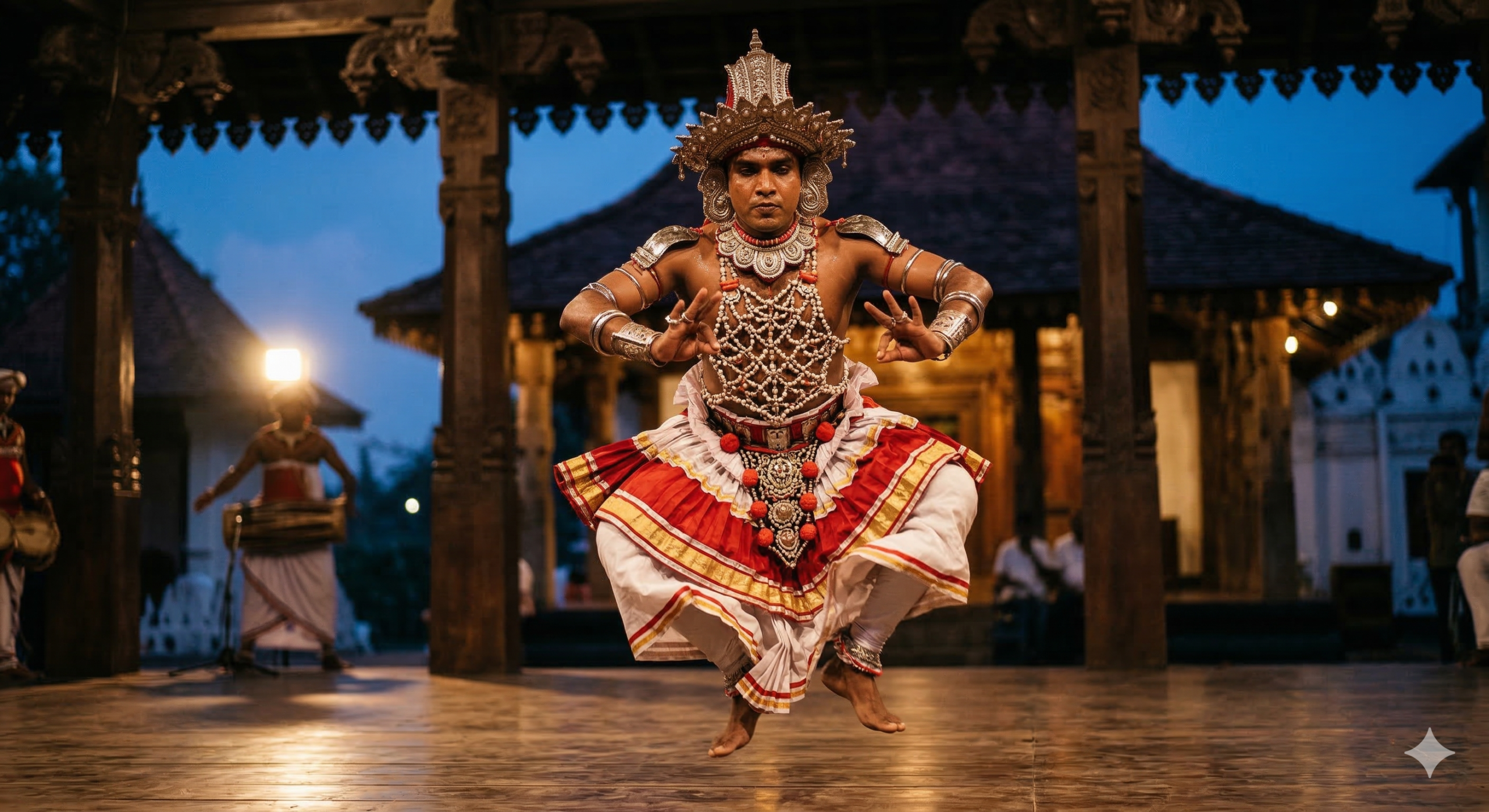
A Dance of History and Belief
Imagine the pounding of drums, the clash of cymbals, the rhythmic jingling of hundreds of anklets, and a whirlwind of performers in elaborate costumes. This is the sensory experience of a Kandyan Dance performance, the quintessential art form of Sri Lanka’s central hills. Far from being a mere spectacle, it’s a living archive of history, a sacred offering, and a powerful symbol of national identity. For centuries, this vibrant tradition has been passed down through generations, evolving from religious ritual to a global cultural ambassador. Let’s journey into the heart of Kandy, to explore the soul of Sri Lanka through its dance.
A Tapestry Woven with Myth and Time
The origins of Kandyan dance are intimately intertwined with the historical and religious fabric of Sri Lanka. The earliest forms are believed to have been sacred rituals, performed within temple precincts as offerings to Buddhist deities. One of the most potent legends attributes the dance’s creation to the need to cure an ancient king from a curse, highlighting its powerful, even mystical, perceived properties.
Over time, these purely ritualistic dances evolved, absorbing influences from South Indian traditions and adapting to the cultural landscape of the Kandyan kingdom. They became a central feature of the Esala Perahera, the grand annual pageant in Kandy that honors the sacred Tooth Relic of the Buddha. In this spectacular procession, dancers perform alongside caparisoned elephants, drummers, and other cultural performers, showcasing the full grandeur of the tradition.
The dances were not just for the kings and monks; they were performed in local communities, connecting everyday life with the divine and the historical. The entire community would be involved in preparing for these performances, from crafting costumes to training the dancers, making it a powerful force for social cohesion.
Unveiling the Ves: A Costume of Symbolic Splendor
Perhaps the most striking visual element of Kandyan dance is the intricate and deeply symbolic Ves costume. This is not just attire; it’s a ceremonial garment that transforms the dancer into a sacred vessel, embodying the divine forces they depict. Each piece has a specific name and significance.
- Ves Thattuwa: The magnificent metallic headdress, meticulously crafted with intricate designs and adorned with multiple spires, is the crown jewel of the costume. It represents the wisdom and purity of the deities and requires immense skill and patience to wear and perform with.
- Net of Beads: A delicate yet elaborate network of pearl and coral beads covers the chest. Beyond its aesthetic beauty, it’s thought to offer spiritual protection and symbolise prosperity and well-being.
- Armlets and Bracelets: The dancer’s arms are adorned with multiple silver armlets (known as Bandara Vallu) and bracelets. These are not merely decorative; their jingling adds another layer of rhythm to the performance and is believed to ward off evil spirits.
- Flowing Skirts: The red and white traditional layered skirt, often made of multiple panels of fabric, creates a dynamic visual as the dancer moves. The colors are deeply symbolic: red for energy, power, and courage, and white for purity, peace, and spirituality. The movement of the skirt itself is thought to mimic the unfolding petals of a lotus flower.
Every element of the Ves costume, from the intricate beadwork to the symbolic colors, contributes to the sacredness and power of the dance, creating a visually captivating and spiritually resonant experience.
A Language of Movement: Power, Grace, and Mudras
Kandyan dance is far more than just dynamic movement; it’s a sophisticated language of expression. Its movements are characterized by a unique blend of powerful, athletic energy and fluid grace. Key elements include:
- Vigorous Footwork: Performed barefoot, the footwork is precise and powerful, creating a compelling rhythmic foundation. Dancers make deliberate, percussive contact with the ground, a movement that is both grounding and energizing.
- Fluid Body Movements: Despite the athletic power, there’s a remarkable fluidity in the torso and arms. Dancers execute complex spins, turns, and acrobatic leaps with seemingly effortless grace, demonstrating the high level of physical conditioning and artistic skill required.
- Mudras (Hand Gestures): One of the most important aspects of the dance is the use of Mudras, symbolic hand gestures passed down through generations. These gestures can depict various aspects of Buddhist mythology, historical events, natural phenomena, and emotional states. A subtle curl of a finger or a particular hand position can convey complex narratives and emotions, adding a deep layer of meaning and spiritual resonance.
Mastering Kandyan dance requires years of dedicated training, not only to build physical strength and agility but also to understand the deep symbolic meaning behind every movement and gesture. It’s a discipline that demands absolute focus, respect for tradition, and a profound connection to Sri Lankan heritage.
A Living Flame of Culture
Today, Kandyan dance has transcended its origins in the temples and hill country to become a globally recognized symbol of Sri Lanka’s vibrant culture. It’s performed on international stages, showcased in festivals around the world, and remains an essential part of national celebrations and cultural events. Despite this global reach, its heart remains in Kandy, where dedicated academies continue to train the next generation of dancers, ensuring the continuity of this remarkable tradition.
More than just a beautiful performance, Kandyan dance is a powerful testament to the resilience, spirituality, and artistic brilliance of the Sri Lankan people. It’s a living flame of culture, a mesmerizing spectacle that continues to enchant, inspire, and connect people around the world to the rich and vibrant soul of Sri Lanka.