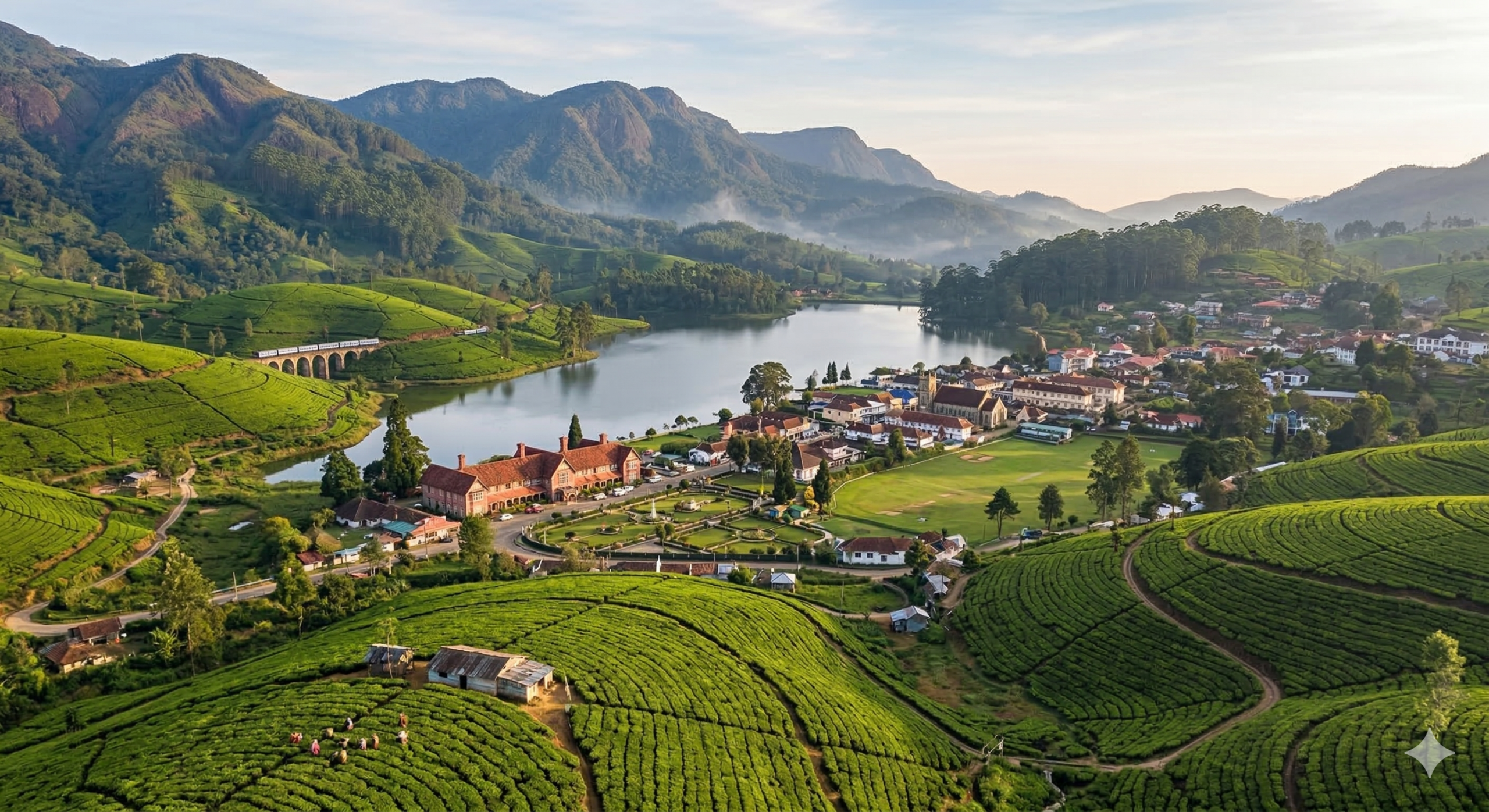
Often referred to as “Little England,” Nuwara Eliya is a place where the tropical warmth of Sri Lanka dissolves into cool mists and endless rolling hills of tea. Nestled at an elevation of 1,868 meters, this highland retreat was a favorite sanctuary for British civil servants and tea planters looking to escape the coastal heat.
Today, it remains a captivating destination where colonial architecture, manicured gardens, and dramatic natural wonders create an atmosphere found nowhere else on the island.
A Glimpse of Britain: Colonial Architecture and Heritage
Walking through the center of Nuwara Eliya feels like stepping back into a 19th-century English village. The British influence is etched into the very foundations of the town.
- The Red-Brick Post Office: Built in 1894, this Tudor-style building is one of the oldest in the country and remains a functioning iconic landmark.
- The Hill Club & Grand Hotel: These historic establishments, with their polished wood interiors, crackling fireplaces, and strict dress codes for dinner, preserve the “Old World” charm.
- Victoria Park: A perfectly maintained urban park filled with exotic flowering plants and migratory birds, named in honor of Queen Victoria’s Diamond Jubilee.
The Sea of Green: The World of Ceylon Tea
Nuwara Eliya is the heart of Sri Lanka’s tea industry. The high altitude and cool climate produce a tea that is light, floral, and highly prized by connoisseurs—often called the “Champagne of Ceylon Tea.”
- Rolling Estates: The landscape is a topographical marvel, covered in a velvet-like blanket of tea bushes as far as the eye can see.
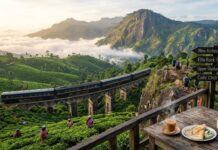
- Factory Tours: Visiting estates like Pedro Tea Estate or Labookellie allows you to see the traditional manufacturing process. You can watch the “two leaves and a bud” being withered, rolled, and fermented before enjoying a fresh cup overlooking the mist-shrouded valleys.
Horton Plains & World’s End: The Edge of the Abyss
For nature lovers, a visit to Nuwara Eliya is incomplete without a journey to Horton Plains National Park, a silent, windswept plateau that feels prehistoric.
- The Trek: The 9km loop takes you through montane grasslands and cloud forests, home to the majestic Sambar deer.
- World’s End: This is the park’s crown jewel—a sheer precipice that drops over 1,200 meters. On a clear day, the view extends all the way to the southern Indian Ocean.
- Baker’s Falls: A stunning, thunderous waterfall tucked within the park, named after the famous explorer Sir Samuel Baker.
Gregory Lake: The Recreational Heart
Located at the edge of the town, Lake Gregory is where locals and tourists alike come to unwind.
- Activity Hub: You can rent swan-shaped pedal boats, take a jet-ski for a spin, or enjoy a pony ride along the shore.
- The Atmosphere: The park surrounding the lake is perfect for a picnic, especially in April during the “Season,” when the town comes alive with horse races, flower shows, and carnivals.
Cascading Beauty: The Waterfalls of the Highlands
The geography of the region makes it a hotspot for some of Sri Lanka’s most impressive waterfalls.
- St. Clair’s Falls: Known as the “Little Niagara of Sri Lanka,” this is one of the widest falls in the country, cascading over rock terraces through a tea estate.
- Devon Falls: Located just a short distance from St. Clair’s, this slender, elegant waterfall drops 97 meters and is best viewed from the roadside lookout points that offer breathtaking panoramas.
Conclusion: A Highland Escape Like No Other
Nuwara Eliya is the perfect antidote to the sun-drenched beaches of the coast. It is a place of quiet reflection, brisk morning walks, and the simple pleasure of a hot cup of tea by a fireplace. It represents the diverse beauty of Sri Lanka—an island that can offer a tropical paradise and a misty highland retreat within just a few hours’ drive.