There are few places in Sri Lanka that capture the imagination quite like Ella. For years, this quiet village, perched on the edge of a massive drop in the Uva Province, has been the darling of the island’s travelers. When people talk about the “Sri Lanka vibe”—that easy blend of breathtaking nature, genuine local hospitality, and adventure—they are usually talking about Ella.
But Ella is more than a postcard. It’s a feeling. It’s the sensation of misty air brushing your face while you stand on a mountaintop, the rhythmic click-clack of a colonial-era train crossing a green valley, and the deep satisfaction of a hot thosai after a day of hiking. In this guide, we explore the distinct components that make Ella the essential heart of the Sri Lankan highlands.
The Pilgrimage of the Tracks: The Nine Arches Bridge
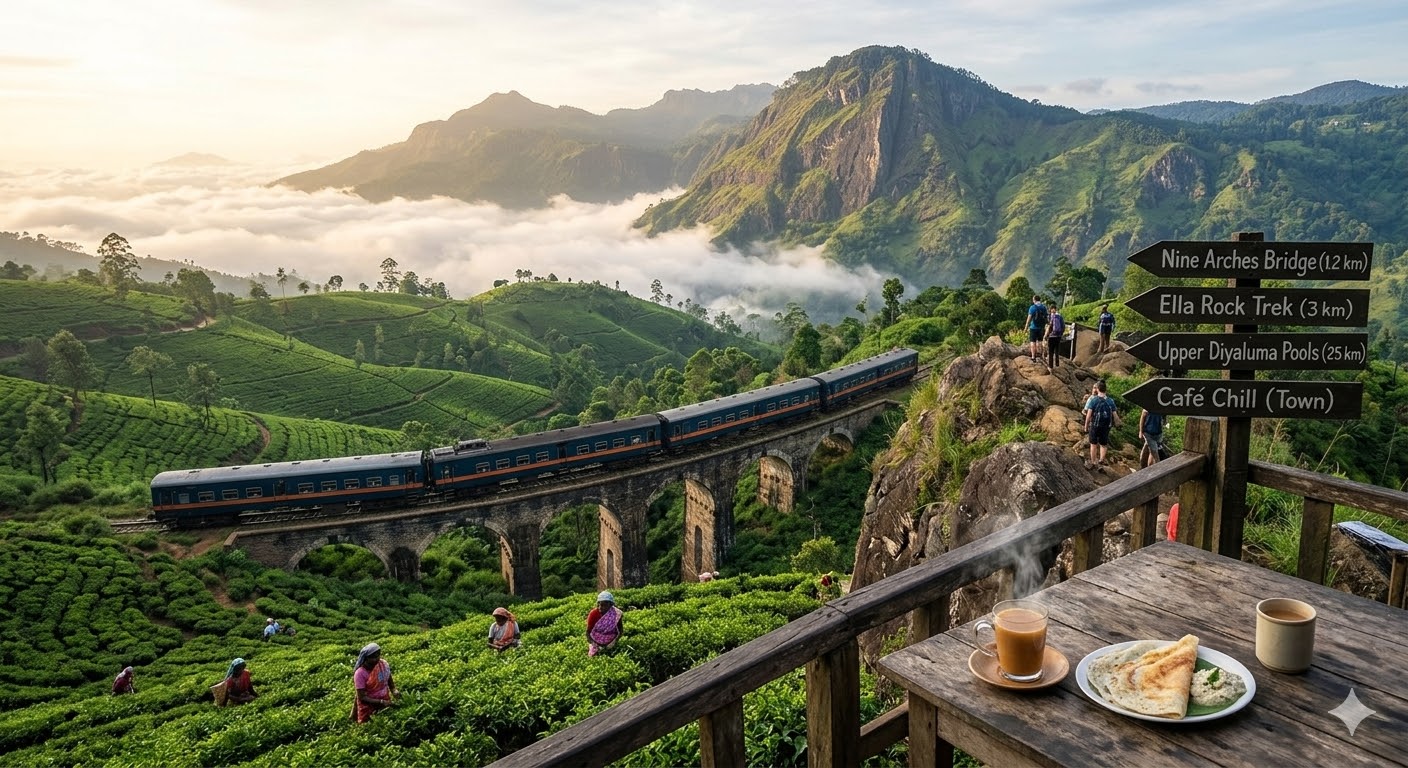
No single image defines Ella (or indeed, modern Sri Lanka tourism) as potently as the Nine Arches Bridge. Tucked away in a lush valley between Ella and Demodara stations, this bridge is a architectural anomaly that looks like it belongs in the Scottish Highlands rather than a tropical tea estate.
- A Masterclass in Resilience: Built during the British colonial period, the bridge is famous because it was constructed entirely from stone, brick, and cement—no steel. The legend says the steel assigned for the project was reallocated to the British war effort during WWI.
- The Ritual: The experience is not just seeing the bridge; it’s being on it. Visitors gather along the railway tracks (which are active!) or hike down to the tea bushes below. The defining moment occurs when the ancient blue or red train rounds the bend and slowly clicks across the nine graceful arches. It is a slow, rhythmic, and incredibly photogenic piece of performance art.
Hiking Ella: Three Legendary Peaks
Ella’s primary draw is its accessibility to dramatic landscapes, and there are three core hikes that every traveler must consider.
- Little Adam’s Peak (The Easy Intro): Named after the massive sacred mountain (Sri Pada), this gentle hike is the ideal warm-up. The trail leads through working tea plantations, offering stunning views from the rocky summit. It’s famous for being the best (and easiest) place to watch the sunrise, as the valley below is often filled with a sea of soft white clouds.
- Ella Rock (The True Challenge): This is the massive cliff face that dominates the town’s view. It is a harder, more demanding trek that requires following the train tracks and navigating a labyrinth of jungle paths. Reaching the precipice rewards you with a heart-stopping, sheer drop and 360-degree vistas. For this hike, a local guide is often recommended.
- Ravana’s Rock (The Legend): Located further afield near Ravana Falls, this hike leads to a large cave network that, according to the ancient Ramayana epic, is where the demon king Ravana hid Princess Sita. It is a steep, muddy, and challenging climb, rich in myth and atmosphere.
The Tea Hills: Emerald Waves of Nuwara Eliya
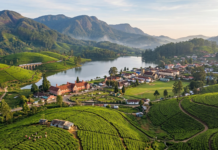
While Nuwara Eliya is often called “Little England,” Ella is arguably the heart of the “Tea Hills” experience. The rolling, emerald-green landscapes that define the region are the result of over a century of meticulous tea cultivation.
- The Architecture of Tea: The landscape is sculpted into impossibly neat terraces, a testament to the skill of the Tamil tea pluckers who work these vertical fields. A visit to a working tea factory, like Amba Estate or Halpewatte, is essential to understanding the complex journey of Ceylon Tea from a hand-picked leaf to the perfect brew.
- Misty Atmosphere: The tea estates are most beautiful in the morning, when the fog and mist cling to the valleys, creating a profound, tranquil silence that is the definition of highland beauty.
A Dip in the Clouds: Ravana Falls and Diyaluma
Waterfalls define the Uva region, but Ella has two of the most spectacular, each offering a completely different experience.
- Ravana Falls: This massive, thundering waterfall is visible directly from the main road outside town. During the monsoon, its volume is immense. It is a spectacular stop, but due to strong currents and slippery rocks, swimming is generally discouraged and often very dangerous near the base.
- Diyaluma Falls (Sri Lanka’s Highest): Located a short tuk-tuk ride away near Koslanda, Diyaluma is the island’s second-highest waterfall (and its most interactive). The adventure involves taking a path (from the Upper Diyaluma approach) that leads to the top of the fall. Here, nature has carved out a series of natural infinity pools right on the sheer edge. It is a surreal and unique experience to swim in cool water while looking straight down into the valley below.
Town Vibe: Thosai, Cocktails, and Community
Finally, Ella’s “vibe” is cemented by its vibrant main street. This singular artery is packed with cozy, open-air cafes, authentic local restaurants, and lively bars that buzz with a unique, relaxed energy.
- Highland Flavors: Ella is a culinary delight. You must try the strong, sweet ginger tea and a plate of hot, crispy thosai or kottu roti (chopped flatbread) at local joints. For a more sophisticated experience, the town is packed with cafes offering everything from avocado toast to vegan curries.
- A Community of Travelers: Ella is the perfect place to swap stories. Its compact nature means you are constantly bumping into the same people you met on the train or on a hiking trail. The bars, like Cafe Chill or Dream Cafe, create an intimate, supportive atmosphere where everyone, from solo backpackers to families, feels welcome.
A Plate That Tells a Story
Sri Lankan Rice and Curry is a celebration of the island’s bountiful nature and its rich cultural tapestry. Every single plate is a masterpiece, a beautifully orchestrated symphony of flavors and textures that has been perfected over centuries. It’s a meal that is shared with family, offered to guests with pride, and enjoyed by everyone. To experience Rice and Curry in Sri Lanka is not just to eat a meal; it’s to connect with the very soul of the island, to understand its history, and to appreciate the profound love that Sri Lankans have for their food. It is truly the heartbeat that sustains, connects, and defines this beautiful island nation.