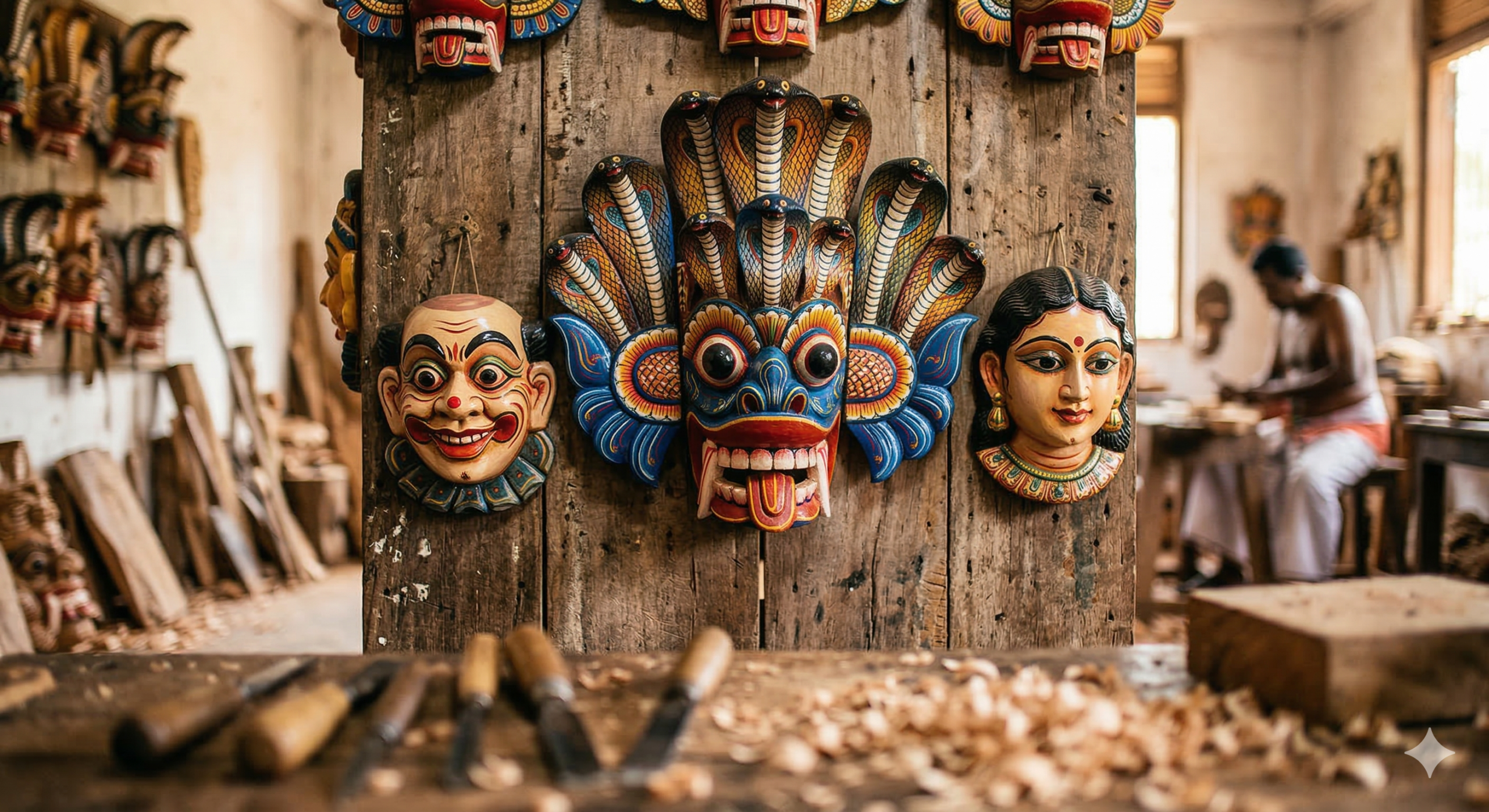
Where Wood Comes to Life
Walk through the coastal town of Ambalangoda, and you’ll hear the rhythmic clink-clink of chisels hitting wood. This is the birthplace of the Sri Lankan mask, an art form that sits at the intersection of ancient folk medicine, satirical theater, and spiritual protection. These are not merely decorative wall hangings; they are vibrant, “living” objects designed to heal the sick, mock the powerful, and dance with the demonic. In this post, we peel back the layers of paint to discover the history and craftsmanship behind Sri Lanka’s most iconic faces.
The Alchemy of the Mask Maker
The creation of a mask is a ritual in itself, beginning long before the first coat of paint is applied.
- The Sacred Timber: Traditional masks are carved from the wood of the Kaduru tree (Strychnos nux-vomica). This wood is chosen because it is exceptionally light, durable, and easy to carve—essential for a dancer who must wear a heavy-looking mask for hours.
- The Seasoning Process: The wood is smoked to extract moisture and prevent insect infestation, a technique that has kept masks intact for over a century.
- Natural Pigments: Historically, the vibrant colors were mixed by hand using natural ingredients: yellow from Gokatu resin, red from Cinnabar, and white from crushed sea shells. Today, while many use modern paints, the traditional color palette of deep crimson, turquoise, and golden yellow remains sacred.
Sanni Masks—The Faces of Healing
Perhaps the most fascinating category is the Sanni masks. In ancient Sri Lankan belief, illnesses were thought to be caused by eighteen specific demons (the Daha Ata Sanniya).
- The Demon of Disease: Each mask represents a specific ailment. For example, the mask for Kana-sanniya represents blindness, while Golu-sanniya represents speechlessness.
- The Maha Kola Sanni Mask: This is a massive, complex masterpiece featuring a central demon figure holding eighteen smaller masks in its clutches.
- The Ritual: In a Tovil (exorcism) ceremony, a healer wears these masks and dances to entice the demon to leave the patient’s body, eventually “dismissing” the disease through a mix of performance and spiritual command.
Kolam Masks—Satire and Storytelling
While Sanni masks deal with the dark and the divine, Kolam masks are all about the human and the humorous. Kolam is a form of traditional dance-drama that originated in the South.
- Social Commentary: These masks depict various characters from colonial and rural Sri Lankan life—the bumbling soldier, the arrogant king, the village gossip, or the drunken official.
- Exaggerated Features: Kolam masks are often larger than life, with bulging eyes and distorted features used to highlight the character’s flaws. They served as a way for common people to safely mock the authorities of their time through theater.
The Gara Yaka—The Guardian of the Home
If you travel through Sri Lanka today, you will often see a small, fearsome mask with bulging eyes and cobra hoods hanging over the doorways of new houses. This is the Gara Yaka.
- Warding off the ‘Evil Eye’: The Gara Yaka is a benevolent demon. He is believed to consume “drishti” (evil eye) and jealousy.
- Symbolism: The cobra hoods (Naga) represent protection and power, while the wide, toothy grin is meant to mock and scare away ill-fortunes. It is the ultimate symbol of protection in Sri Lankan folk culture.
Conclusion: A Tradition That Refuses to Fade
Sri Lankan masks are more than just souvenirs; they are a vibrant link to a time when art was a primary tool for medicine and social justice. Whether it is the terrifying face of a disease demon or the regal features of a Kolam king, each mask tells a story of an island that finds beauty in the supernatural. To own a Sri Lankan mask is to hold a piece of a living ritual that has been dancing for a thousand years.